


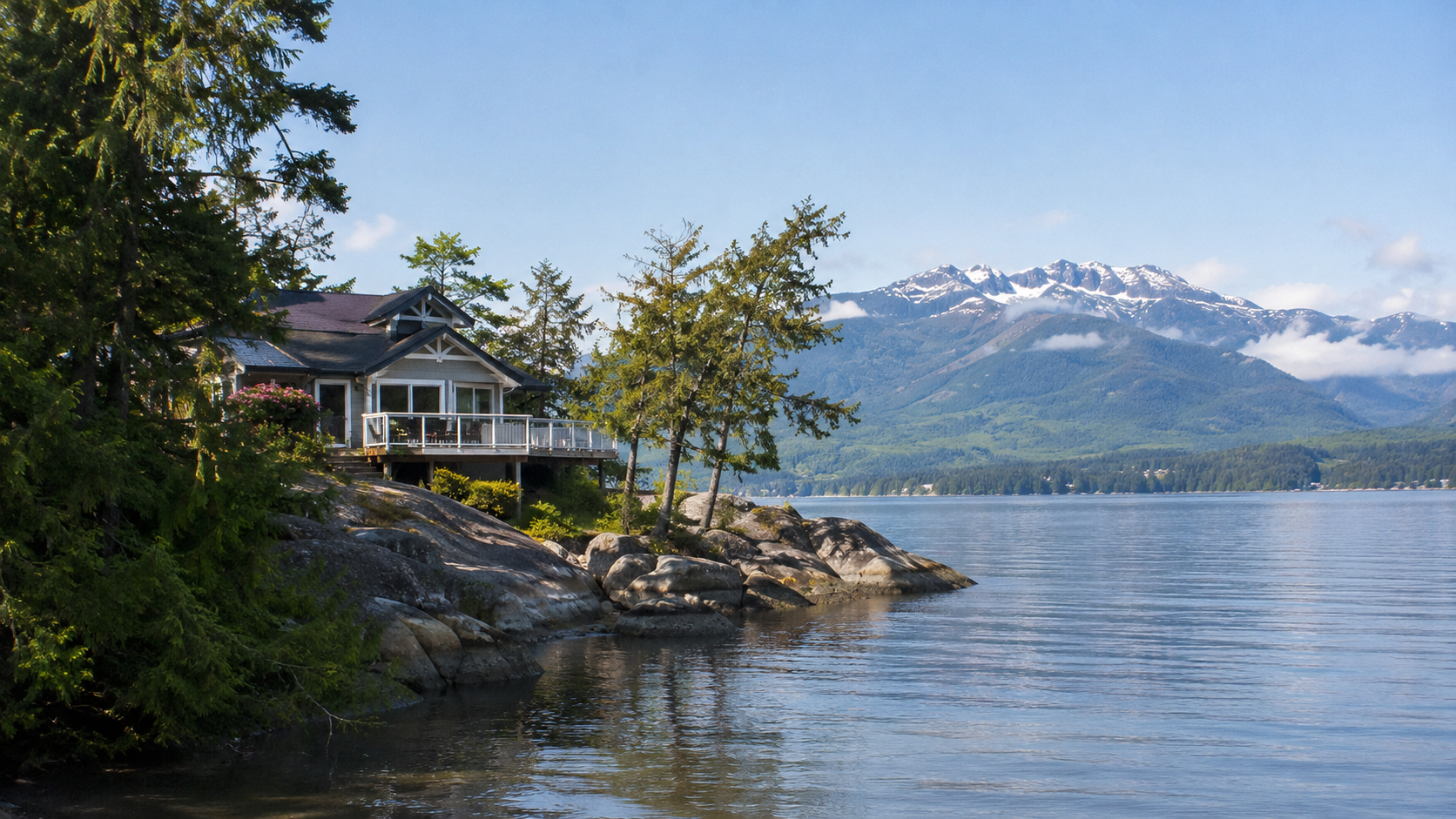
For some buyers, absolutely. A waterfront home can offer a lifestyle that is difficult to replicate elsewhere: beautiful views, a stronger connection to nature and the enjoyment of living close to the water. It may also appeal to future buyers who value those features.
But waterfront homes in Squamish are not automatically better investments. The purchase price, location, property condition, insurance costs, shoreline restrictions and future resale demand all affect whether a particular property makes financial sense.
If you’re considering buying a waterfront property in Squamish, the important question is not simply whether waterfront living is desirable. It’s whether the property’s benefits justify its price and ongoing costs for your circumstances.
What Makes Waterfront Homes in Squamish Appealing?
Squamish offers a distinctive setting, surrounded by mountains and outdoor recreation. For buyers who want to be close to nature, living near the water can be an attractive part of the lifestyle.
Depending on the property and its location, waterfront living may offer several benefits.
1. A setting that feels special
Water views can change how a home feels. Whether you enjoy watching the light change across the water, spending quiet time outdoors or simply having a scenic view from your living room, the setting may add meaningful value to your everyday life.
However, not every property marketed as waterfront offers the same experience. Some homes have direct access to the shoreline, while others offer a water view or access by a nearby path. It’s important to understand the exact situation before you buy.
2. A feature that may appeal to future buyers
Waterfront locations can attract buyers looking for something distinctive. A desirable setting, privacy, outlook and usable outdoor space may help a property stand out when it comes time to sell.
That does not guarantee stronger price growth or a faster sale. Resale performance depends on the specific property, purchase price, broader market conditions and the number of buyers willing to pay a premium for its features.
3. A lifestyle you may value for years
An investment isn't only about what you might sell a property for later. It can also include the enjoyment you get from living there.
If being close to the water is central to how you want to live, paying more for that setting may make sense, as long as the purchase remains financially comfortable.
The key is to distinguish between the lifestyle value a property offers you and the financial return it may or may not deliver.
Do Waterfront Homes in Squamish Hold Their Value Better?
This is one of the most important questions to ask, and the honest answer is that the waterfront label alone cannot tell you whether a property will appreciate more than other homes.
A meaningful comparison would look at similar properties over time, taking into account their location, size, age, condition and other characteristics. It would also consider the price paid initially, ongoing ownership costs and the time required to sell.
Waterfront properties may have features that buyers are willing to pay more for, but they can also come with limitations that affect their appeal.
For example, a home with an attractive outlook but significant shoreline maintenance needs may have a very different financial profile from a well-maintained property with straightforward access and manageable ownership costs.
Before treating a waterfront home as an investment, consider three questions:
What am I paying extra for? Identify the premium attributable to the view, location, access or other features.
Will future buyers value the same features? Consider the likely buyer pool, not just your own preferences.
What could affect resale? Review the property's condition, title, permitted uses, insurance availability and any relevant environmental or hazard considerations.
A local real estate professional can help you compare the property with relevant sales, but no one can guarantee future appreciation.
The Hidden Costs of Waterfront Ownership
A waterfront property can come with additional responsibilities that aren't always obvious during a viewing. These are worth investigating before you make an offer.
Shoreline maintenance and erosion
The condition of the shoreline matters. Depending on the property, you may need to understand erosion, drainage, retaining structures, vegetation and the maintenance history of any existing shoreline works.
If work is needed, don't assume you can simply build a retaining wall, change the shoreline or remove vegetation. Activities near water may be subject to environmental and local approval requirements.
Ask for relevant records and seek qualified professional advice if you have concerns about the shoreline or any proposed work.
Flood and other natural hazards
A waterfront location makes it especially important to investigate potential flood and erosion exposure. The level and type of risk vary by property, so it would be misleading to assume every waterfront home faces the same hazards.
The District of Squamish has an Integrated Flood Hazard Management Plan. Review the applicable information for the property you're considering and ask whether any flood-related requirements or assessments affect it.
A property-specific assessment is more useful than relying on the neighbourhood name or the appearance of the land.
Insurance availability and premiums
Insurance is another item to investigate early. Ask an insurer to assess the actual address and confirm what coverage is available, including any applicable exclusions, deductibles and limitations relating to water damage or flooding.
Don't assume that a standard home insurance policy covers every type of flood or water-related damage.
If coverage is limited or expensive, that could affect both your ongoing costs and the property's future marketability.
Docks, moorage and shoreline access
A waterfront listing may mention a dock, private moorage or direct access to the water. Before placing value on those features, verify the legal arrangements.
In British Columbia, most freshwater and saltwater foreshore is Crown land. Owning the adjoining property does not automatically mean you own the shoreline or have permission to build or maintain a dock.
The provincial government explains the requirements for private moorage and dock authorisation.
If a dock is part of the property's appeal, confirm its authorisation, any tenure or permission arrangements, ongoing obligations and transfer requirements before proceeding.
What to Check Before Buying a Waterfront Property in Squamish
A little extra due diligence can help you understand what you're buying and identify potential costs before they become your responsibility.
Review the title and property boundaries
Have your lawyer or notary review the title, registered easements, covenants, rights of way and other relevant interests. If the exact boundary between private land and the foreshore matters to you, obtain appropriate professional confirmation.
Don't assume that the entire area visible from the garden belongs to the property.
Understand restrictions on future improvements
If you hope to add a deck, improve shoreline access, build a dock or make other changes, check the relevant zoning and permit requirements first.
The District of Squamish development permit information explains that projects near watercourses may require additional review, depending on the property and proposed work.
Confirm the rules that apply to the specific site rather than relying on what neighbouring properties have done.
Check the building's condition
A waterfront setting doesn't compensate for problems with the house itself. Arrange an appropriate inspection and investigate any concerns about the foundation, roof, drainage, moisture or other building systems.
Where necessary, obtain specialist assessments and estimates before deciding whether the asking price represents good value.
Compare the property with similar sales
Try to compare like with like. A waterfront property may command a premium, but the size of that premium depends on the location, property features, condition and buyer demand.
Look at comparable sales and current competition, and consider whether the premium makes sense relative to your budget and expectations.
Waterfront vs. Non-Waterfront Homes: Which Is the Better Investment?
Neither option is automatically better. The right choice depends on what you're buying, what you're paying and how you plan to use the property.
A non-waterfront home may offer better value if it gives you more usable space or lower ongoing costs for a price you're comfortable with. A waterfront home may be worth the premium if its setting is important to you and the property's risks and costs are manageable.
The decision should be based on the individual property rather than the category alone.
So, Are Waterfront Homes in Squamish Worth the Investment?
They can be worth considering if the location offers a lifestyle you genuinely value, the purchase price is supported by comparable sales, and you understand the property's maintenance requirements and potential risks.
Before making a decision, weigh the enjoyment of living near the water against the full cost of ownership. Investigate insurance, shoreline conditions, title details, access rights and any restrictions that could affect future improvements.
Most importantly, don't buy a waterfront property simply because you expect it to appreciate faster than other homes. Focus on whether the specific property is a sound fit for your finances, needs and long-term plans.
Thinking About Buying Waterfront Homes in Squamish?
Finding the right waterfront property takes more than searching for a beautiful view. It means understanding the property's features, location, ownership details and potential costs before you commit.
If you're considering a purchase in Squamish, Evelyn Schellenberg can help you explore available properties, compare your options and identify the questions worth asking as you evaluate a home.
Visit the Buying page to learn more about the buying process, or get in touch to discuss what you're looking for.
The best property isn't simply the one with the best view. It's the one that fits your life and makes sense for your future.
Frequently Asked Questions
Are waterfront homes in Squamish a good investment?
They may be, but the outcome depends on the property's purchase price, location, condition, ownership costs and future buyer demand. Waterfront status alone does not guarantee appreciation or a better return.
Do waterfront homes always cost more to maintain?
Not always, but some waterfront properties have additional considerations involving shoreline conditions, drainage, erosion, docks or specialised insurance. Review the condition and ownership requirements of each property before buying.
Do I own the beach when I buy a waterfront home in BC?
Not necessarily. British Columbia owns most freshwater and saltwater foreshore. The exact property boundaries and any applicable rights or permissions should be verified through the relevant records and professional advice.
Can I build a dock at my waterfront property?
Not automatically. Docks and other private moorage facilities on Crown foreshore may require provincial authorisation, and other local or federal requirements may also apply. Verify the permissions for the specific property before assuming a dock can be built or altered.
What should I check before buying a waterfront home in Squamish?
Review the title and boundaries, applicable hazard information, shoreline condition, insurance availability, property inspection findings and any restrictions on future improvements. Compare the asking price with relevant sales and include potential maintenance costs in your budget.
 The data relating to real estate on this website comes in part from the MLS® Reciprocity program of either the Greater Vancouver REALTORS® (GVR), the Fraser Valley Real Estate Board (FVREB) or the Chilliwack and District Real Estate Board (CADREB). Real estate listings held by participating real estate firms are marked with the MLS® logo and detailed information about the listing includes the name of the listing agent. This representation is based in whole or part on data generated by either the GVR, the FVREB or the CADREB which assumes no responsibility for its accuracy. The materials contained on this page may not be reproduced without the express written consent of either the GVR, the FVREB or the CADREB.